
AI Video Effects: How to Make Your Content More Cinematic and Engaging
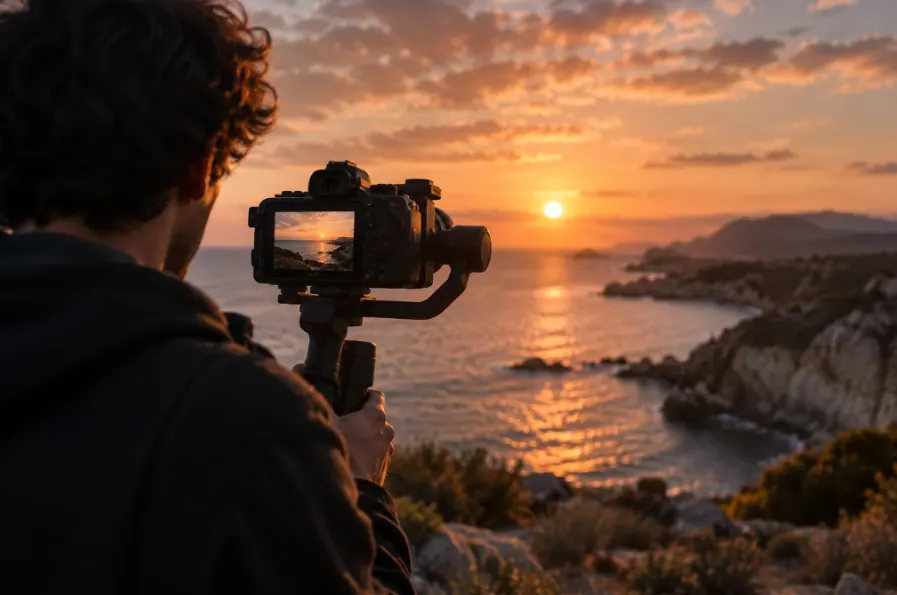
Video has become one of the most important formats for brands, creators and businesses, but simply publishing more video is no longer enough.
Audiences are exposed to an enormous amount of content every day. Social feeds move quickly, attention spans are short and even professionally shot footage can struggle to stand out when the visual treatment feels predictable.
This is where AI video effects are starting to change the creative process.
Instead of relying only on traditional filters or manual post-production, generative tools can now help modify movement, lighting, environments, transitions, visual style and even the apparent behavior of the camera itself.
A simple clip can become more atmospheric. A static product shot can gain depth and movement. Two unrelated scenes can be connected through a visually coherent transition. Backgrounds can be transformed without rebuilding an entire set.
The objective is not necessarily to make every video look spectacular.
The real value of AI video effects lies in giving creators more control over how a piece of content feels, where the viewer looks and how the story moves from one moment to the next.
What are AI video effects?
AI video effects are visual transformations generated or assisted by artificial intelligence.
They can be applied to existing footage, images or generated video and may affect different elements of a scene.
For example, AI can help modify:
Camera movement.
Lighting.
Backgrounds.
Visual atmosphere.
Motion.
Transitions.
Color treatment.
Depth.
Weather.
Speed.
Subject appearance.
Scene style.
Traditional video effects often depend on manually adjusting masks, keyframes, tracking points or layers.
AI-based workflows can automate part of that process by analyzing the visual content and generating changes that remain connected to the original scene.
This does not mean that the technology removes creative direction.
In fact, the opposite is often true.
The more possibilities become available, the more important it becomes to decide which effect actually supports the idea behind the video.
Why cinematic effects matter in digital content
The word “cinematic” is often associated with expensive cameras, complex lighting setups or large production teams.
But cinematic content is not defined only by equipment.
It is also created through movement, rhythm, framing, light, contrast, depth and atmosphere.
A slow camera push toward a subject creates a different emotional response from a static shot.
A warm sunset environment communicates something different from flat office lighting.
A dramatic reveal can make a product introduction feel more important.
These details influence how viewers interpret a scene before they consciously process the message.
That makes visual effects particularly useful in environments such as social media, where content often has only a few seconds to attract attention.
AI makes some of these techniques more accessible because creators can experiment with visual transformations after the original footage has already been captured.
How AI video effects work
AI video effects rely on models capable of understanding visual information across multiple frames.
This is important because video is not simply a collection of independent images.
Objects, people, backgrounds and lighting need to remain coherent as time progresses.
Recent research in generative video has focused heavily on controlling motion and maintaining temporal consistency between frames. For example, research presented at CVPR has explored methods for controlling camera paths, object motion and complex scene dynamics while maintaining visual coherence.
In practical terms, a tool may analyze:
The subject.
The environment.
Motion direction.
Depth relationships.
Lighting.
Camera position.
Previous and subsequent frames.
It can then generate new visual information while attempting to preserve continuity.
That is what allows an effect to feel integrated into the scene instead of appearing as a graphic placed on top of it.
Cinematic camera movement without reshooting
One of the most interesting applications of AI video effects is simulated camera movement.
Traditionally, movements such as dolly shots, crane movements or controlled zooms need to be planned while filming.
Generative video can increasingly create the impression of camera motion after the original image or footage already exists.
A static composition may be transformed into:
A slow push-in.
A pull-back.
A lateral tracking movement.
A tilt.
A reveal.
A subtle orbit around a subject.
This can be especially useful for product content, lifestyle images, campaign photography and social posts.
Instead of leaving a visual completely static, movement can guide the viewer toward the most important part of the frame.
The key is subtlety.
Not every scene needs dramatic movement. In many cases, a gentle change in perspective can feel more polished and intentional than an aggressive camera effect.
Transforming lighting and atmosphere
Lighting has one of the strongest influences on the mood of a video.
The same scene can feel completely different depending on whether it appears to take place under bright daylight, warm evening light or a darker cinematic environment.
AI video effects can be used to alter or enhance this atmosphere.
For example, footage can be adapted to suggest:
Golden hour.
Nighttime.
Studio lighting.
Neon environments.
Soft diffused light.
Dramatic shadows.
Fog or haze.
Rain.
Seasonal changes.
For brands, this opens interesting possibilities.
A product photographed in a neutral setting could be transformed into different campaign environments without producing an entirely new shoot for each visual direction.
The effect should still support the product and the message.
If lighting becomes more memorable than what the video is actually communicating, the effect may be working against the content.
Background transformation and scene enhancement
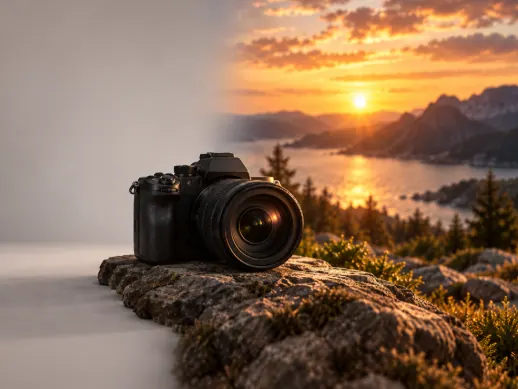
Backgrounds often determine how professional a video feels.
A useful piece of footage may have been captured in an environment that does not fully match the intended campaign.
AI can help modify that environment while keeping the main subject recognizable.
This could involve replacing a plain wall with a more sophisticated interior, extending an environment beyond the original frame or adding visual elements to create more depth.
For ecommerce and product marketing, this is particularly useful.
One product can potentially appear in several contexts:
A skincare product might move from a minimal studio to a natural spa environment.
A piece of furniture could appear in different interior styles.
A fashion image might be placed within a city, beach or editorial setting.
Instead of treating the background as something fixed, AI allows it to become another part of the creative direction.
Adding movement to otherwise ordinary scenes
Motion is one of the main elements separating video from static content.
But not all movement needs to come from people or objects physically moving during filming.
AI can introduce subtle environmental motion that makes a scene feel more alive.
Curtains can move gently.
Water can ripple.
Leaves can respond to wind.
Lights can shift.
Steam can rise from a product.
A background can gradually change.
These details may seem small, but they can increase visual richness.
This relates closely to the possibilities explored in AI Video Animation, where static imagery can be transformed into moving sequences.
The difference here is that the objective is not necessarily to animate the entire image.
Instead, movement can be introduced selectively to improve atmosphere and focus.
AI transitions that connect scenes more naturally
Transitions are one of the most visible areas where AI can change video editing.
Traditional transitions usually work by applying an effect between two clips.
AI can potentially generate the visual transformation connecting both scenes.
For example, one object may gradually become another.
A camera movement could continue seamlessly into a completely different environment.
A product might dissolve into the ingredient from which it is made.
A building could transform from sketch to finished architecture.
This creates opportunities for storytelling that go beyond simple cuts, fades or wipes.
However, transitions should still have a purpose.
If every shot transforms dramatically into the next one, the result can quickly become distracting.
The strongest transitions are often those that help establish a relationship between two ideas.
Speed, motion blur and dynamic movement
The feeling of speed is another important cinematic tool.
Fast movement can communicate energy, urgency or excitement.
Slow movement can create luxury, calm or drama.
AI-assisted workflows can help change how movement is perceived by modifying timing, interpolation and motion characteristics.
This can create effects such as:
Slow-motion moments.
Speed ramps.
Accelerated transitions.
Smooth motion between frames.
More pronounced motion blur.
Freeze-and-release effects.
These techniques are particularly effective in sports, fashion, product launches and short-form social content.
Again, the effect should follow the message.
A luxury product may benefit from slow, controlled motion, while an event teaser might need something faster and more energetic.
Visual style transformation
Another powerful category of AI video effects is stylistic transformation.
Footage does not necessarily need to remain photorealistic.
It may be reinterpreted with characteristics inspired by illustration, animation, editorial graphics, surreal environments or other visual directions.
This makes it possible to develop campaign content that moves between realism and stylization.
For example, a real person might remain recognizable while their environment becomes illustrative.
A product may move from photography into an abstract world.
A city scene could gradually become a conceptual graphic sequence.
Style transfer can be particularly effective when a brand already has a strong visual identity.
But consistency matters.
If the visual style changes too much from frame to frame, the effect may feel unstable rather than creative.
How to keep AI effects visually consistent
One of the main challenges in generative video is maintaining continuity.
A still image only needs to look correct once.
A video needs to look correct across every frame.
Small inconsistencies can become very noticeable when something is moving.
Common issues include:
Changes in facial features.
Altered product details.
Background elements appearing or disappearing.
Unnatural movement.
Flickering.
Lighting changes between frames.
Objects changing shape.
This is why temporal consistency remains such an important area of research in generative video. Studies presented at CVPR have specifically explored methods for preserving subject appearance and motion patterns across generated sequences.
For professional content, the safest approach is usually to apply effects selectively and review the output carefully.
A subtle effect that remains consistent is often more convincing than a technically ambitious transformation that changes important details.
Product videos: making simple footage feel more premium
Product marketing is one of the clearest use cases for AI video effects.
Brands frequently have large libraries of existing product photography and basic video clips.
AI can help transform these assets into more dynamic content without requiring a completely new production.
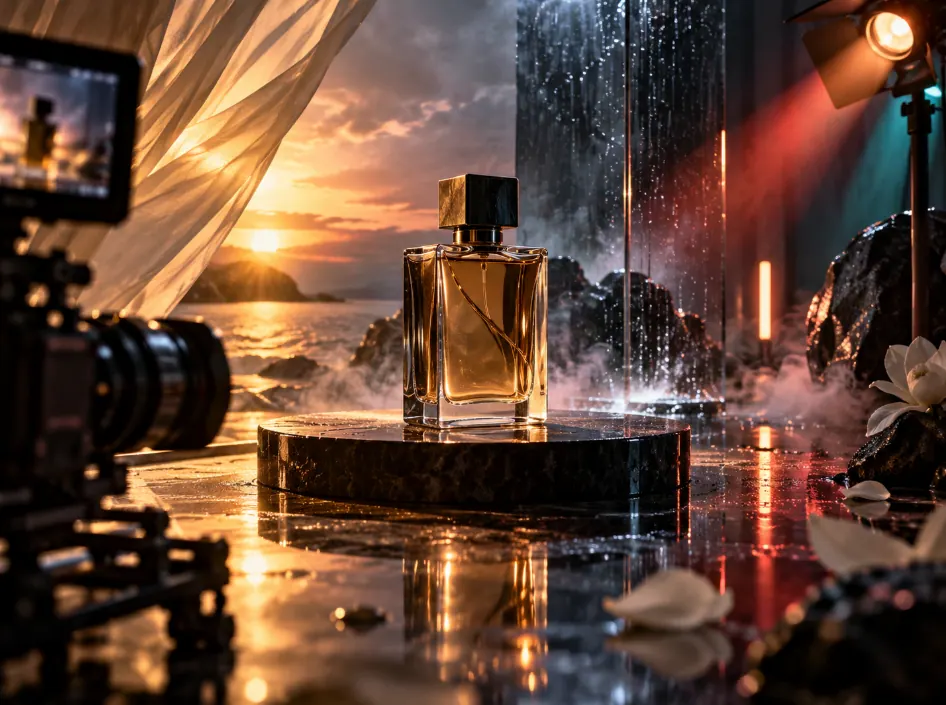
Imagine a perfume bottle photographed against a simple background.
A cinematic effect could introduce:
Moving light reflections.
Slow camera rotation.
Atmospheric particles.
A changing background.
Soft shadows.
A gradual reveal.
Motion in surrounding ingredients.
The product remains the focus, but the visual treatment gives the content more depth.
This can be particularly useful for paid advertising, ecommerce pages, product launches and social media campaigns.
Social media content that stops the scroll
On social platforms, the first seconds matter enormously.
AI effects can help create stronger openings.
A static portrait could suddenly move.
A product might appear from an unexpected transition.
The environment could transform behind the subject.
The camera might rapidly move from a wide shot to a close-up.
These techniques can make people pause long enough to understand what the content is about.
But there is an important distinction between attracting attention and creating noise.
The effect should make the content easier to notice, not harder to understand.
The strongest short-form videos usually have one clear visual idea rather than many competing effects.
Advertising and branded storytelling
Advertising gives AI video effects another role: world-building.
A brand may want to create a setting that would be expensive, impractical or impossible to produce physically.
Instead of filming in multiple locations, generative effects can help create those environments digitally.
A campaign could move from city to desert.
A product could appear at a monumental scale.
A person could walk through a changing series of environments.
Packaging could transform into ingredients or materials.
The value here is not simply reducing production.
It is expanding the number of creative directions that can realistically be explored.
Educational and explainer videos
Cinematic does not always mean dramatic.
AI video effects can also make educational content easier to follow.
Visual emphasis can direct attention toward specific elements.
Backgrounds can change to indicate a new chapter.
Objects can animate to illustrate a process.
Complex information can become more intuitive through movement.
For explainer videos, these effects can help maintain attention without requiring constant cuts between talking heads and slides.
This can work especially well together with AI Video Avatars or AI Talking Photos, where a presenter delivers the message while generated visual elements support what is being explained.
Before-and-after transformations
Before-and-after content is naturally engaging because it creates a clear contrast.
AI video effects make this format even more flexible.
The transformation can happen directly on screen instead of requiring two separate clips.
An empty interior can become furnished.
A plain product shot can turn into a campaign image.
A daytime environment can become night.
A sketch can become a realistic object.
A still photograph can become a cinematic scene.
For social media, this format works well because the viewer immediately understands the visual progression.
It also shows the effect itself rather than simply describing it.
AI video effects vs traditional editing
AI effects do not make traditional video editing unnecessary.
They address different parts of the creative process.
Traditional editing remains essential for:
Timing.
Narrative structure.
Audio.
Precise cuts.
Color control.
Brand consistency.
Final delivery.
AI becomes especially valuable when creators want to generate or transform visual information rather than simply rearrange existing footage.
The two approaches work best together.
A creator might use AI to generate camera movement, transform a background or create a transition and then use a traditional timeline to control exactly where that element appears.
This hybrid workflow offers both creative flexibility and editorial precision.
The biggest mistake: using effects because you can
As AI video tools become easier to use, one temptation is to add effects everywhere.
That usually weakens the result.
Every visual transformation should have a reason.
Before applying an effect, ask:
What should the viewer feel or understand differently because of this change?
If the answer is unclear, the effect may not be necessary.
A product launch might benefit from dramatic lighting.
A tutorial probably does not.
A fashion campaign might support surreal transitions.
A corporate explainer may need more restrained motion.
The objective should always be to reinforce the content rather than demonstrate how many effects the tool can generate.
Match the effect to the brand
Different brands communicate in very different visual languages.
A playful consumer brand may use exaggerated transitions and transformations.
A luxury brand may prefer slower motion, cleaner frames and subtle atmospheric effects.
A technology company might use controlled digital environments.
A wellness brand may benefit from organic movement and natural lighting.
For this reason, AI video effects should be treated as part of brand design, not simply post-production decoration.
Consistency across multiple videos helps viewers recognize a visual identity even before they consciously notice a logo.
Build one effect around one idea
A useful creative principle is to focus each short video around one dominant effect.
That central idea gives the video structure.
Additional editing can support it, but the audience still understands what they are watching.
This tends to produce stronger creative content than combining multiple unrelated effects simply because they are available.
AI video effects as part of a wider content workflow
One of the most useful ways to think about AI video effects is not as a final step, but as part of a larger content workflow.
A campaign may begin with a single product photograph.
That image can first become a moving scene using AI Video Animation.
A talking presenter could be added using AI Video Avatars or AI Talking Photos.
Additional scenes may be generated from written ideas using Text to Video AI.
Finally, AI video effects can help unify those pieces through movement, atmosphere and transitions.
One original asset can therefore support multiple pieces of content.
This is particularly valuable for brands that need to produce frequently for several channels.
How Oopsify can help transform visual ideas into video
Creating engaging video content increasingly involves more than filming.
Brands may start with photographs, product visuals, portraits, written concepts or existing video clips and transform them into multiple formats.
Oopsify brings these possibilities into a more accessible creative workflow.
AI video effects can become part of that process by helping creators enhance movement, create visual transformations and make existing assets feel more dynamic.
Instead of treating every campaign as a completely new production, visual material can be reused, adapted and expanded.
This can help brands create more content while maintaining a clearer creative direction.
Make the effect serve the story
The most successful AI video effects are not necessarily the most dramatic.
They are the ones that make a piece of content easier to notice, understand or remember.
Sometimes that means transforming an entire environment.
Sometimes it means introducing a subtle camera movement or changing the light.
AI gives creators access to an increasingly broad range of visual possibilities, but creative judgment remains essential.
A cinematic video is not cinematic because it contains more effects.
It feels cinematic because movement, light, rhythm and visual direction work together.
Used with intention, AI can help bring those elements into everyday content creation without requiring every idea to begin with a complex production.
Frequently asked questions about AI video effects
What are AI video effects?
AI video effects are visual transformations created or assisted by artificial intelligence. They can modify elements such as camera movement, lighting, motion, backgrounds, transitions and overall visual style.
Can AI make an ordinary video look cinematic?
Yes. AI can help introduce cinematic characteristics such as camera movement, atmospheric lighting, depth, transitions and visual stylization. The quality of the result depends on the original material and how the effect is applied.
Can AI video effects be added to existing footage?
Yes. Many AI video workflows can transform existing video clips or use still images as the starting point for new moving sequences.
What types of content work well with AI video effects?
They can be useful for product videos, social media content, advertisements, educational videos, branded storytelling, music content and creative campaigns.
Are AI video effects the same as filters?
No. A filter usually changes the appearance of existing pixels, such as color or contrast. AI effects can generate new visual information, alter movement, transform backgrounds or create changes across an entire scene.
Can AI create camera movement from a static image?
Yes. Generative video systems can simulate movements such as push-ins, pull-backs, pans or other changes in perspective from a single image, although results depend on the image and the model being used.
How many effects should I use in one video?
There is no fixed number, but fewer well-chosen effects generally work better than many unrelated transformations. Each effect should support the message or visual concept.
How can brands keep AI video effects consistent?
Using a clear visual direction, consistent reference material and similar motion, lighting and styling across content can help. Outputs should also be reviewed carefully for unwanted changes between frames.
Are AI video effects useful for social media?
Yes. Motion, transformations and strong visual openings can help make content more noticeable in fast-moving feeds. However, the effect should not make the message harder to understand.
How do AI video effects fit with other generative video tools?
They can be combined with image-to-video animation, text-to-video generation, AI avatars and talking-photo workflows to create more complete video campaigns from a relatively small number of original assets.
← All posts